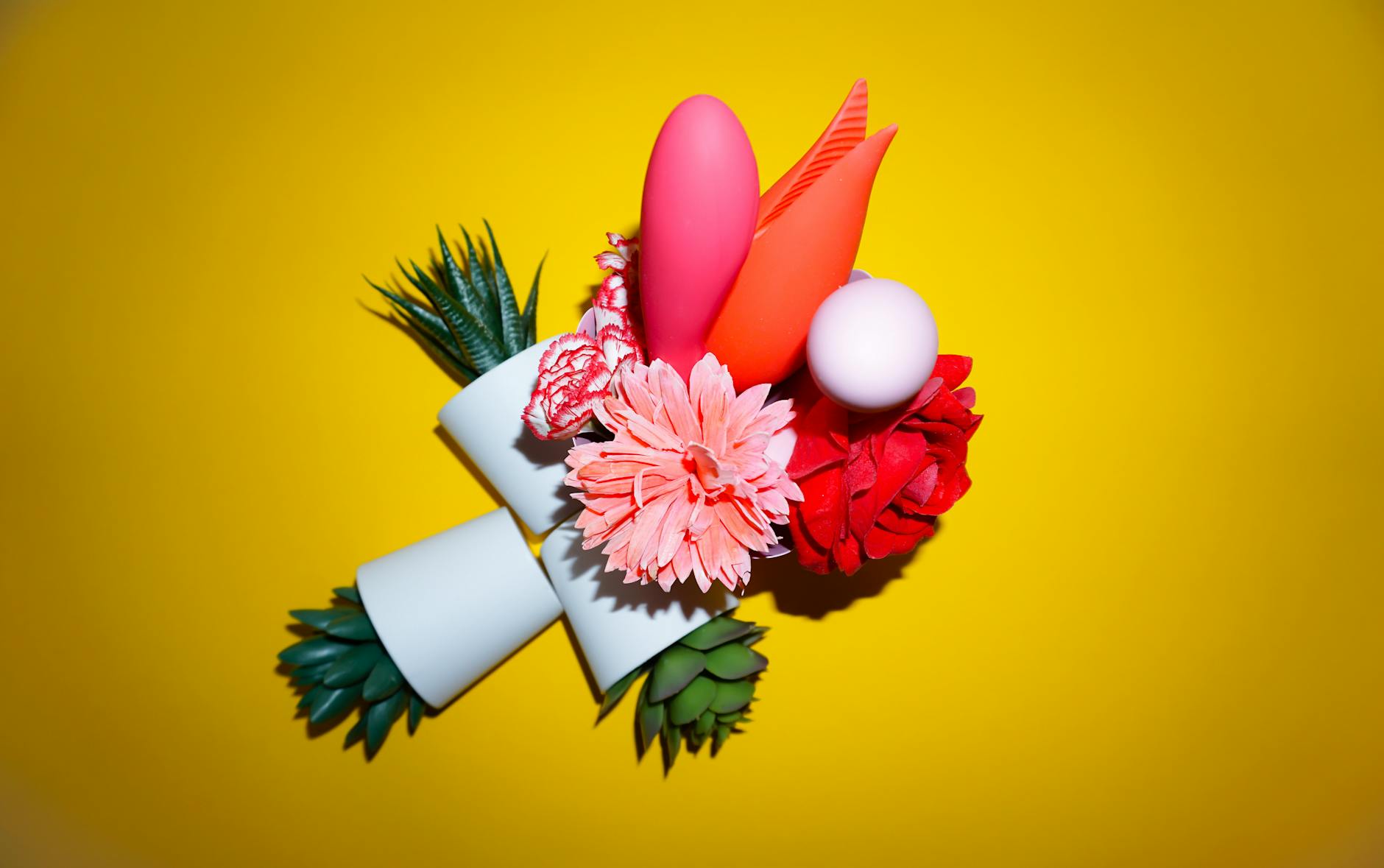
You're not broken. Your lemon vibrator isn't broken either. What's happening is called sensory adaptation, and it's the exact same mechanism that makes you stop noticing your shirt after 10 minutes or the hum of your fridge after a week. Your nervous system is doing its job too well.
If you're using a lemon clitoral vibrator every single day, especially at the same intensity level, your nerve endings literally become less responsive to that stimulus. Not permanently. But right now, in this moment, it probably feels like you're touching yourself with a phone on silent mode. That numbness is real, it's temporary, and there's a specific way to fix it.
Your clitoris has about 8,000 nerve endings concentrated in a space smaller than a pea. That's an incredible density of sensation. But that density comes with a catch. Continuous or repetitive stimulation triggers a protective mechanism in your nervous system called habituation.
Habituation is your brain's way of filtering out constant background noise so you can focus on what actually matters. It's useful when you're trying to concentrate at work. It's less useful when you're trying to come.
Here's what happens physiologically. When you stimulate the same nerve fibers repeatedly at the same frequency and intensity, those nerves get tired. They literally require increasingly strong signals to fire the same response. It's not that you're getting worse at pleasure. It's that your nervous system has gotten efficient at ignoring this specific input.
Regular vibrator use, especially daily use, accelerates this timeline dramatically compared to manual stimulation or partnered sex. Vibrators deliver consistent, intense stimulation in a way a hand simply can't replicate. That's part of why they're so effective. It's also part of why sustained daily use can lead to that numb, disconnected feeling.
Desensitization isn't subtle. You'll notice it pretty clearly.
Your lemon vibrator or any clitoral vibrator used to feel incredible. Now you're barely feeling it, even at the highest intensity setting. You find yourself turning up the power, chasing a sensation that seems to keep receding. Manual touch stops working too. Partnered stimulation feels muted. The pleasure that used to arrive quickly now feels distant or doesn't show up at all.
The key distinction: desensitization is about reduced sensation across multiple types of stimulation, not just vibration. If your vibrator feels numb but manual touch still registers fine, that's actually something different and worth investigating separately.
Desensitization also has a timeline. It doesn't happen overnight. Usually it builds over weeks of daily use. You might notice it creeping in gradually before it fully hits.
Stop using your lemon vibrator completely. Not for a day. For at least two to four weeks.
I know that's not the answer you wanted. But this is the mechanism: your nerve endings need to return to baseline sensitivity. That baseline doesn't reset during occasional breaks. It resets during extended abstinence. Two to four weeks is the sweet spot for most people. Some need six weeks. Rarely, someone needs eight.
During the reset window, you can engage in other forms of pleasure. Manual stimulation. Partnered sex. Toys with different mechanisms, like air-suction devices. Reading erotica. Masturbation without any device. The goal is to keep pleasure alive without retraining your nervous system to expect that specific vibration pattern.
Why not just switch vibrators? Because the issue isn't the vibrator. It's the repetitive stimulation. Switching to a different clitoral vibrator or even a lemon sucker with a different intensity pattern might work temporarily, but you'll hit the same wall again if you're using it daily at maximum settings.
After the reset window, introduce your lemon vibrator again, but differently. Use it on lower intensity settings. Use it for shorter sessions. Use it fewer days per week. These boundary adjustments protect against re-sensitization.
You notice sensation fading, so you crank the intensity up to compensate. Higher intensity triggers faster habituation. A few weeks later, even maximum intensity feels dull, so you bump it up again. Except you can't. You've maxed out. So you use it more often instead. This cycle is self-reinforcing and it leads directly back to desensitization.
Break the pattern by setting a personal "cap." If your lemon clitoral vibrator has five intensity levels, never use it above level three. This feels counterintuitive when you're chasing sensation, but it actually preserves sensation long-term. Lower intensity, if you stick with it, feels stronger and more responsive than high intensity after three weeks.
Also set a frequency cap. Daily use is what created this situation. Move to three times weekly maximum. Your pleasure doesn't need to be a daily practice to be valuable. Some of the most intense orgasms happen after a few days of anticipation.
The four to six weeks you're off your vibrator isn't a punishment. It's an opportunity to explore other dimensions of pleasure you might have overshadowed with daily vibrator use.
Manual stimulation feels completely different when it's your primary practice. You discover your own rhythm. You find pressure points you'd forgotten about. You reconnect with what you actually crave versus what you're used to.
Partner touch often feels more present. When you're not relying on a vibrator, partnered sex or masturbation becomes more nuanced. You notice things you'd been missing.
Some people discover that mixing modalities works best. Vibrator twice a week. Manual three times. Partnered stimulation twice. This variety protects against adaptation better than daily reliance on a single tool.
If this reset window is particularly frustrating, that's worth noting. Sometimes difficulty with extended abstinence points to something worth exploring with a therapist. Not because vibrator use is bad. But because reliance on a specific tool can sometimes mask other needs around self-soothing or emotional regulation worth understanding.
After four weeks of abstinence, your lemon vibrator will feel like a revelation. This is the moment people get excited and immediately return to daily use. Don't.
Reintroduce gradually. Once weekly for two weeks. Twice weekly for another two weeks. Then increase if you want to, but stay mindful of your intensity level.
The magic number for sustainable vibrator use seems to be three to four times weekly, using levels one through three on your device, and keeping sessions to under ten minutes. This is enough frequency to feel truly good without triggering habituation.
Your clitoris will thank you. Your nervous system will thank you. And honestly, the intensity of pleasure you experience when you're using a vibrator three times a week instead of daily is noticeably sharper.
If you've taken a four-week break and sensation still hasn't returned, that might indicate something beyond behavioral habituation. Hormonal changes, medication side effects, or underlying health conditions can all affect clitoral sensitivity.
A few clues that this might be medical rather than behavioral. Numbness across multiple types of stimulation even before your vibrator use was frequent. Sudden onset rather than gradual. Numbness in other parts of your body too. Pain during or after stimulation.
If any of those apply, a conversation with your doctor is worth having. Mention the desensitization specifically. Some antidepressants and antihistamines can reduce sensation. Birth control changes, thyroid issues, and blood sugar dysregulation can too. If you've been through any of those shifts recently, that's context worth sharing.
Two to four weeks is typical. Some people feel a noticeable shift in week two. Others need closer to six weeks. It depends on how long you were using daily, what intensity level you were on, and individual nervous system variation. The fact that you're asking the question probably means you're already noticing dulling, which suggests you're in the early-to-mid desensitization phase and likely to reset faster.
Technically yes, but it defeats the purpose. The goal is to let your nervous system reset to baseline. Using a different vibrator, even occasionally, keeps stimulating those same nerve pathways. If you really need a tool during the reset, an air-suction device like the Lem uses a completely different mechanism and is less likely to trigger the same adaptation response. But manual stimulation or partnered touch is your best bet.
No. Desensitization is reversible. After a proper reset and more moderate use going forward, you'll absolutely feel vibration again. People often come back from desensitization stronger than before because they've learned what sustainable practice looks like.
For some people, yes. If you're using it at low intensity, for short sessions, on a lemon clitoral vibrator designed to minimize numbness, daily use might work. But most people hit habituation much faster than they expect. Three to four times weekly is the baseline that works for most without triggering desensitization.
This is worth a direct conversation. Explain that you're resetting sensitivity and that it'll actually serve both of you better long-term. More pleasure after a reset beats less pleasure from daily over-use. If your partner can't respect a four-week boundary, that's information worth having about your relationship dynamics, and something worth exploring with a couples therapist.
Not inherently. The Lem and other clitoral vibrators work through similar mechanisms. What matters is frequency, intensity level, and duration, not the specific brand. That said, air-suction devices like the Lem do engage nerve endings differently than traditional vibration, so some people find they can use them more frequently without hitting habituation as hard. But the same rules apply: more frequent use accelerates adaptation regardless of the tool.
Desensitization after daily vibrator use feels permanent in the moment. It's not. Four weeks and a shift in your use patterns will bring sensation roaring back. The fact that you're reading this means you're ready to reset. That's actually half the battle.
If you're stuck or if the reset window isn't working the way you expected, reach out. We've got resources at Hello Nancy and a contact line if you want to talk through what's happening.
Your pleasure matters. Protecting it long-term matters too.