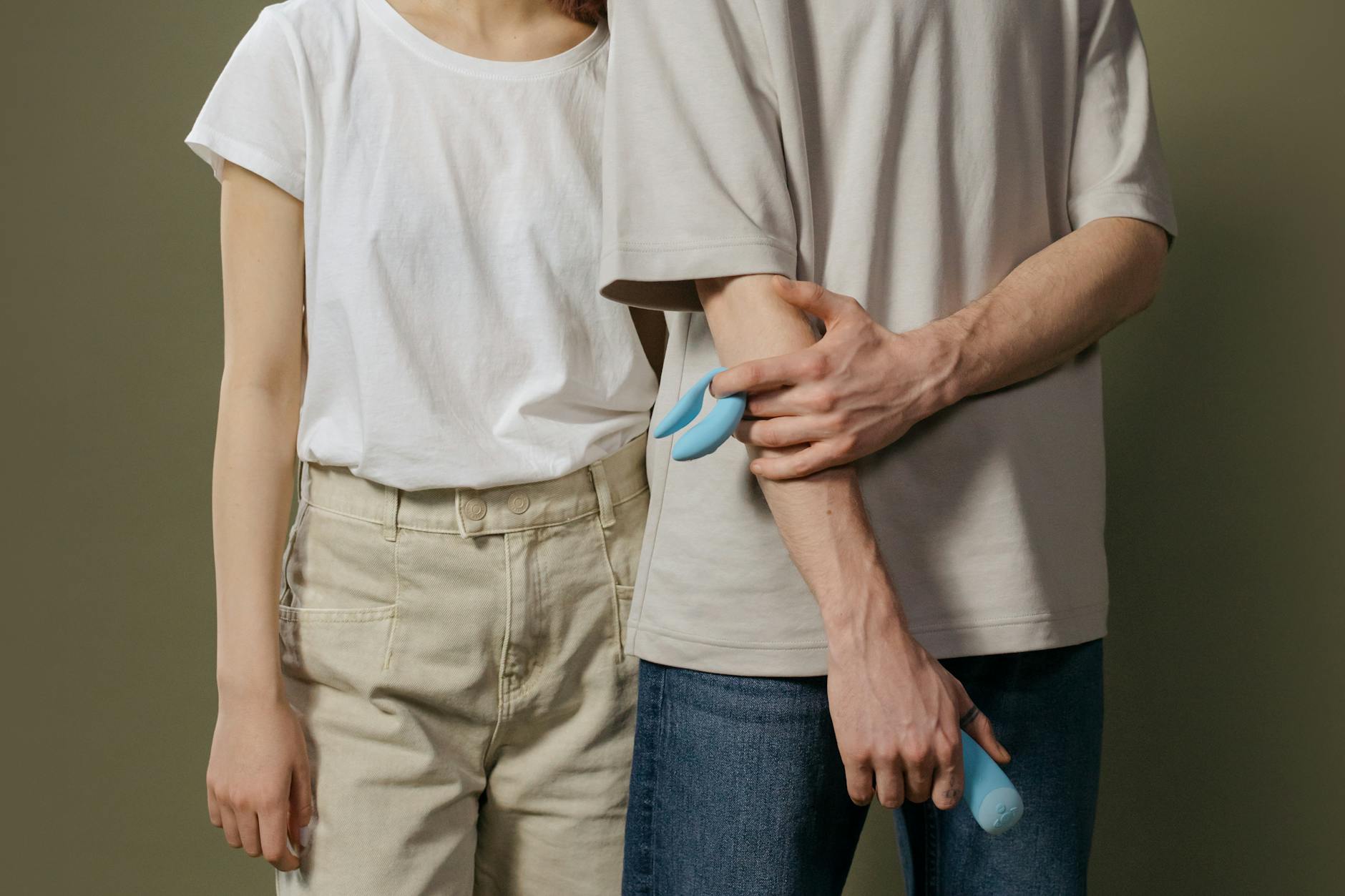
How to Use a Lemon Vibrator With Sexual Trauma or Abuse History
Reclaiming pleasure is possible. Here's how to rebuild a sense of safety, control, and enjoyment in your own time, with grounding tools that actually help.
Let's be real. If you've experienced sexual trauma or abuse, the idea of pleasure can feel loaded with contradiction. You might want it back. You might feel scared of it. You might not trust your own body to know what feels good anymore. All of that is completely normal.
The good news: pleasure after trauma isn't something you have to earn or prove. It's something you rebuild, slowly, with tools that give you back a sense of control. A lemon vibrator, used thoughtfully, can be one of those tools.
For many people healing from sexual trauma, the difference between a lemon vibrator and other approaches comes down to one thing: directness and control. A lemon clitoral vibrator gives you precise, predictable stimulation in a way that external touch sometimes doesn't. You can turn it on and off instantly. You can adjust the intensity without negotiating with anyone else. That autonomy matters.
Here's what I've seen in my practice: survivors often find that the predictability of a vibrator is calming in itself. You know exactly what's going to happen. There are no surprises. No one else involved. Your body isn't being asked to respond to someone else's timing or rhythm. That sense of control can be the first step toward rebuilding trust in your own pleasure.
The clitoral suction design of devices like the Lem creates a different sensation from direct vibration. Instead of friction, it uses gentle suction and pulsation. For some survivors, this feels less invasive, less reminiscent of unwanted touch, because it's a different sensation entirely. Your nervous system recognizes the difference.
If you haven't experienced pleasure in years, or if the idea of touching yourself feels foreign or unsafe, that's where we start. Not with the toy. With consent to yourself.
Consent, in trauma recovery, isn't just about saying yes to someone else. It's about saying yes to your own body. That means:
You get to change your mind mid-session. Stop whenever you want. Restart whenever you want.
You don't owe anyone (including yourself) an orgasm. Pleasure isn't the goal. Safety is.
You can spend three months just holding the vibrator without turning it on. That's not a failure. That's healing.
When you're ready to use the vibrator, external use only. The clitoris has thousands of nerve endings concentrated in a small area. Start with the device on the lowest setting, touching the outside of the vulva, not inside. Many survivors find it grounding to wear underwear while exploring, or to use it over clothing at first. You're literally in control of how much sensation touches you.
If at any point your body feels tight, your breathing changes, or you feel the urge to stop, stop immediately. No questions. That's your nervous system telling you something.
For trauma survivors, pleasure can sometimes trigger flashbacks or dissociation. Your body might suddenly feel unfamiliar or dangerous, even though you're safe. Grounding techniques help keep you present.
The 5-4-3-2-1 technique. While using the vibrator, name five things you can see, four you can feel (your feet on the ground, the blanket texture, the vibrator), three you can hear, two you can smell, one you can taste. This keeps your brain anchored to the present moment instead of drifting into memory.
Temperature contrast. Hold an ice cube in one hand while using the vibrator with the other. The cold sensation gives your nervous system a literal anchor point. This is modern, it's happening now.
Verbal grounding. Quietly say to yourself: "I am safe. This is my hand. This is my choice. I can stop anytime." Repeat. It sounds simple because it is, and your nervous system needs simple.
The vibration itself as grounding. Some survivors find that the steady buzz of the vibrator is calming, almost meditative. If that's you, you might use it not for orgasm but for five minutes of self-soothing.
If you're in a relationship and want to explore this with your partner, the conversation happens before the toy is even visible. This isn't about selling them on the idea. It's about explaining what you need.
Try something like: "I'm interested in exploring pleasure again, but I need things to move at my pace. I might want to use a vibrator because it gives me control. I might need to stop suddenly without explaining why. I need you to be okay with that."
A good partner will say yes. If they push back, ask why. Sometimes partners feel rejected or worried they're not enough. That's a separate conversation, and it's important. You might benefit from couple's therapy before bringing the vibrator into the bedroom.
Once you do involve a partner, establish signals. Not every form of communication works in the moment. A hand squeeze can mean "keep going." Two squeezes mean "pause." No hand squeeze at all means they check in verbally: "Still okay?"
Your partner can be present without touching you. Sometimes just knowing they're there, respecting your boundaries, is the safety net you need.
One thing I hear from survivors is fear: "If I use a vibrator, will I become dependent on it? Will I never feel pleasure without one?"
The short answer: no. Your nervous system doesn't work that way. Using a lemon vibrator won't break your ability to feel sensation without it. What might happen is that you'll discover you prefer it, especially in the beginning. That's okay. Use what works while you're healing. Later, your preferences might shift. That's healing too.
Flashbacks during or after attempting to use a vibrator
Panic attacks when you think about sexual touch
Dissociation (feeling numb, disconnected from your body)
Deep shame or self-criticism around the idea of pleasure
A trauma-informed therapist, ideally one trained in somatic (body-based) approaches like EMDR or sensorimotor psychotherapy, can help. You don't need a therapist's permission to use a vibrator. But you might benefit from having someone guide you through the sensations and emotions that come up.
If you're in a relationship, a couples therapist trained in trauma can help you and your partner rebuild intimacy together. This isn't something you have to do alone.
Healing from sexual trauma isn't about getting back to how things were. It's about building something new. A vibrator like the Lem is a tool in that process, not the whole process.
You might use it once a week. You might use it once a month. You might stop using it for six months and come back to it. All of that is healing. What matters is that you're choosing. You're in control. Your pleasure belongs to you.
Between you and me, some of my clients who've survived trauma tell me that reclaiming their own pleasure is the most powerful form of healing they've experienced. Not because the vibrator is magic. Because taking back ownership of your body, on your timeline, is an act of revolution against what happened to you.
Yes, but slowly. The predictability and control of a clitoral vibrator can actually feel safer than other approaches because you're in charge of every sensation. Start with the device off, just holding it. Turn it on only when your nervous system feels ready. If flashbacks happen, that's information your body is giving you, not a sign you're doing anything wrong. Work with a trauma-informed therapist alongside this exploration.
Numbness is a common trauma response. Your nervous system might be protecting you by reducing sensation. Instead of pushing through, view numbness as a signal to slow down. Use the vibrator for just a few minutes. Pair it with grounding techniques. Over time, with safety and consistency, sensation often returns. If numbness persists, check in with your therapist.
That depends on how much detail feels safe to share. You don't owe anyone a full disclosure of what happened to you. But your partner does need to understand that you might need to stop suddenly, or that certain touches might not feel okay. You can say, "I have trauma in my history, and I need you to respect my boundaries without needing explanations." A good partner will respect that.
Completely normal. Trauma often comes with the false belief that what happened was somehow your fault, or that you don't deserve good things. Those beliefs are lies your nervous system learned to tell for survival. Pleasure isn't betrayal. It's reclamation. If guilt comes up, you're likely touching something deeper that a therapist can help you work through.
There's no timeline. For some survivors, it takes weeks. For others, it takes years. Healing isn't linear. You might have a breakthrough where you feel totally safe, then have a difficult day where old fears resurface. That's normal. Progress doesn't mean straight progress. It means you keep coming back, at your pace, with compassion for yourself.
That's a sign you need to have a deeper conversation about insecurity, intimacy, and what your partner needs to feel secure in the relationship. A vibrator isn't about replacing your partner. It's about you having agency over your own pleasure. If your partner can't accept that, especially given your trauma history, that's worth exploring in couples therapy. You deserve a partner who supports your healing.
Here's what I know from working with survivors: reclaiming pleasure is possible. It doesn't look the same as it did before, and that's okay. It might look smaller, quieter, slower. It might take longer. But it's real, and it's yours.
A lemon vibrator, used with intention and grounding, can be part of that journey. Not the whole journey. Just a tool that says: your body is yours. Your pleasure is worth exploring. You get to choose.
If you're struggling with how to move forward, or if you want support thinking through your own healing process, reach out. That's what I'm here for.
Contact Hello Nancy if you have questions about how to approach this journey.