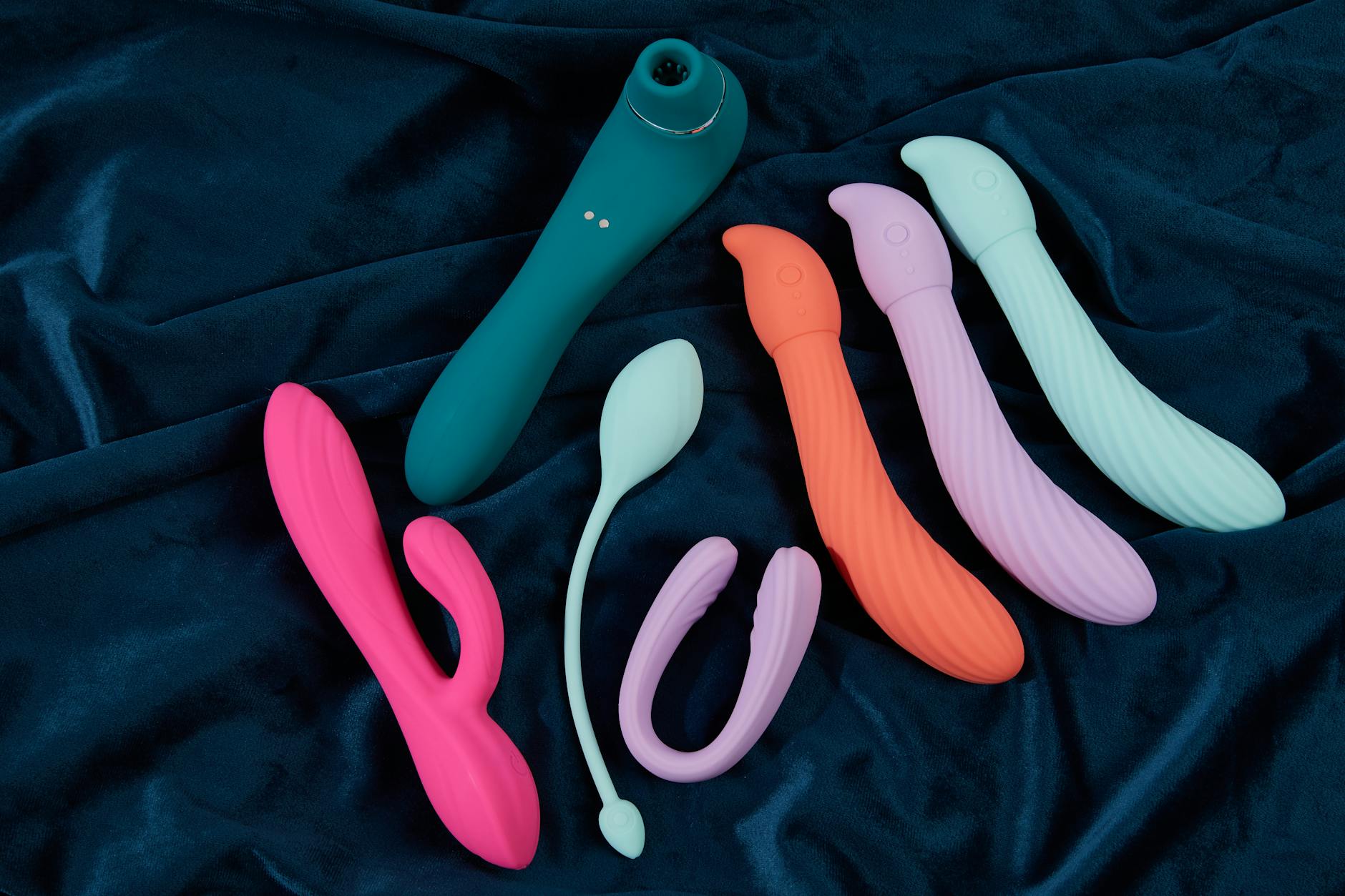
The conversation is scarier than the device itself. Most people I work with know exactly what they want to try. The friction is all in telling someone new without sounding clinical, needy, or like they're about to surprise their partner with something they didn't ask for. Between you and me, that's where the real work is.
Here's the thing: introducing a lemon vibrator to a new partner doesn't require a big emotional moment or a fancy setup. It requires honesty about what you want, clarity that this isn't a rejection of them, and enough comfort to say it out loud without apologizing.
Not the timing of when you introduce the vibrator. The timing of when you have the conversation about it. That's different, and most people get it backwards. You don't bring it up mid-intimacy or right as things are heating up. You don't surprise your partner with it during sex. You definitely don't mention it as "something I need because you're not enough." (You're not thinking that, but your new partner might hear it that way if you're not careful.)
The best moment is casual but deliberate. Not at a dinner table with full eye contact and nowhere to escape. Not while you're both distracted. Think: cuddled up after sex, lights dimmed, both of you already feeling close and connected. This is when your partner is most likely to hear your actual words instead of the anxiety underneath them.
If you live together or spend a lot of time together, this window exists naturally. If you don't, you might engineer it. A text that says "Hey, I want to talk about something I want to try in bed. Nothing heavy, just something I've been curious about" opens the door without pressure. It gives them a heads-up without making it a whole thing.
"I really like what we have, and I want to try something that I think we'd both enjoy."
"I've been curious about using a lemon clitoral vibrator. I think it could feel amazing for both of us."
"My pleasure matters to me, and I want to explore what actually works for my body. I'd love your help with that."
Here's what doesn't work:
"I need this to orgasm." (Implies they're not doing the job.)
"It's just a toy, it's not about you." (Sounds defensive, which makes them defensive.)
"I read online that everyone's using them." (Peer pressure works worse on adults.)
"I used one with my ex and it was amazing." (Immediately triggers comparison.)
The difference is simple. Good language centers on what you want. Bad language centers on what's wrong with the status quo. Your new partner will believe whichever story you tell first.
"I thought you liked what we do now." Translation: You're threatening their sense of being enough.
Your move: "I do. Wanting to add something doesn't mean what we have isn't working. It's like wanting to try a new restaurant when you already have a favorite. Different, not better or worse."
"That feels weird to me." Translation: They're not ready yet.
Your move: "That's fair. We don't have to rush. Can we talk about what feels weird about it?" Then actually listen. Sometimes it's insecurity. Sometimes it's past baggage. Sometimes they just need time to sit with the idea.
"Yeah, let's try it." Translation: They're excited or at least willing.
Your move: Don't overload them with information right away. "Great. I'll pick one up. We can go at whatever pace feels right." Let them adjust to the idea before the device even arrives.
"I'm not sure it's for me." Translation: Curiosity exists but there's hesitation.
Your move: "Cool. Would you be open to watching me use it first? No pressure on you to do anything. Just a chance to see what it's about." This removes the pressure of simultaneous first-time nerves.
A lot of new partners feel less threatened by a clitoral vibrator than they do by, say, an internal toy or a strap-on. Why? Because it's not positioned as a replacement. It's positioned as an addition. The Lem's suction design also feels less clinical than a standard vibrator. It mimics a sensation that a partner can't exactly replicate, which makes it feel less like you're comparing them.
When you're introducing a lemon vibrator specifically, you can lean into that: "It's designed to do something specific that feels different. I'm curious how it works with everything else we're already doing."
If you're still nervous, start with the idea that you'll use it solo first. This takes the pressure off your partner entirely. They get to watch, learn what it does, see that it genuinely feels good to you, and then decide if they want to be involved. That's how a lot of successful introductions actually happen.
Don't overthink the setup. You don't need candles or a whole vibe shift. You need comfort, curiosity, and a willingness to laugh if something feels awkward (which it might). Here's what helps:
Start without clothes off if that feels safer. Seriously. Some people find it easier to talk through the device first when there's less vulnerability in the room. Once the newness wears off and your partner is comfortable with the idea, the clothes come off naturally.
Use lube. This is not negotiable. Water-based, always. Even if you don't think you need it, the device works better with a little slickness.
Let your partner try it on you first if they want to. Control is huge. Knowing they can hold the device, adjust the intensity, and set the pace means they're part of the experience, not watching from the sidelines.
Talk during. "That feels good." "Try the pulsing pattern." "A little higher." Your partner isn't a mind reader. They're also probably paying more attention to how you're reacting than to how the device is working. Help them out.
Don't expect fireworks the first time. Sometimes it takes a few tries to find the right angle, the right pressure, the right rhythm. That's normal. It's not a referendum on whether the toy is good or whether your partner is doing it right. It's just the learning curve.
Here's something nobody talks about: after the first few times, the lemon vibrator stops being a "thing we're trying" and becomes just part of your routine. You've moved past the communication work into the actual comfort of using it. That's the goal.
Some couples find that a lemon clitoral vibrator becomes solo territory. You use it when you're by yourself, and sometimes your partner joins in. Some couples find it becomes a regular part of partnered sex. Neither is wrong. The device doesn't have a vote.
What matters is that the conversation doesn't end after the first use. Check in. "How are you feeling about that?" "Want to keep trying or is it not your thing?" Your partner's comfort matters as much as your pleasure.
If your new relationship is heading somewhere, this conversation is actually a win. It means you're communicating about what you want and building a foundation where both of you can say yes and no without shame. That's rare. That's valuable.
That's the insecurity underneath. Address it directly but gently: "I want this because I want to feel really good with you, not instead of you. There are things my body responds to that have nothing to do with whether I want you or not." Some people need to hear this once. Some need to hear it a few times. That's part of building trust with someone new.
Not inherently. Some couples are comfortable with it right away. Some need six months to build that kind of trust. The length of time matters less than the quality of communication. If you feel safe enough to be honest about what you want, you're probably ready to have the conversation.
No. You're the one who knows you want to try it. Lead with that. "I want to try something" is clearer than "Would you be cool if I wanted to try something?" The second one puts them on the spot and makes them responsible for your curiosity. Own it.
Then you respect that. You don't push. You don't bring it up again for a while. You definitely don't use it in front of them without permission or sneak it into your shared space. If this is a dealbreaker for you, that's information you need early in the relationship. But most people who say no the first time come around later once the newness and threat wear off.
Start by asking what you actually want from partnered sex that isn't happening now. More intensity? A different kind of stimulation? Help reaching orgasm? Different sensation timing? The device should solve a specific problem, not just be a novelty. If you're using it because you genuinely want a clitoral vibrator, that's solid ground. If you're using it to fix a relationship problem, that won't work.
Not at all. It's actually a sign that something's right. It means you're comfortable enough to be honest. It means you're prioritizing your own pleasure. It means you trust your partner enough to be vulnerable. Any good relationship eventually gets here. The timing just varies.
Introducing a lemon vibrator to a new partner is not about the device. It's about communication, honesty, and figuring out if you can say what you want without shame. The toy is just the vehicle. If you can have this conversation well, you can have harder ones later. That's what matters.
Start with clarity about what you want. Stay curious about what your partner needs to feel secure. Build the conversation first, and the rest follows. Your pleasure matters. Their comfort matters. Both things can be true at the same time.