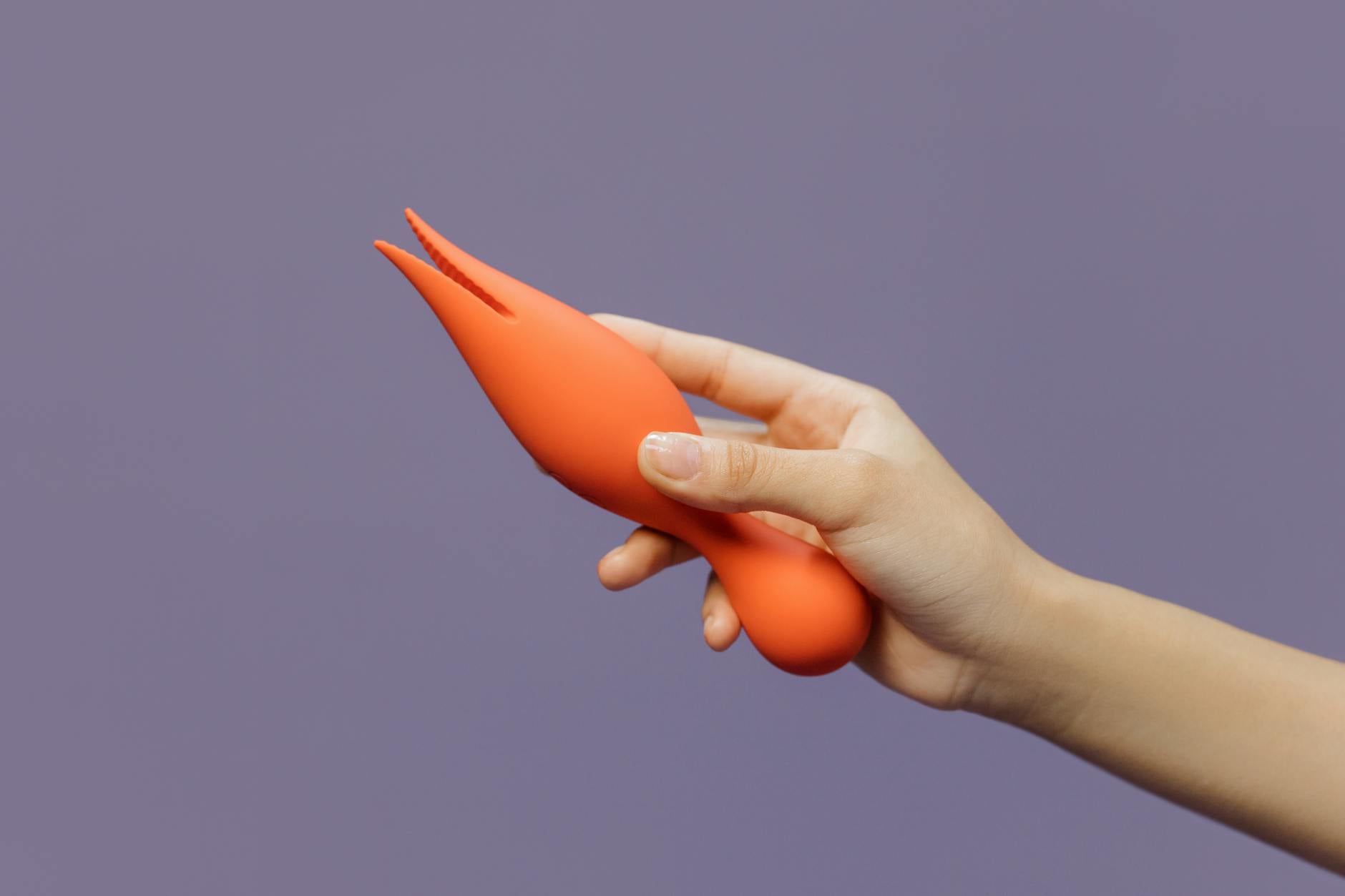
How to Use a Lemon Vibrator for Better Orgasms When You're on Antidepressants
SSRIs make climax harder but not impossible. Here's the exact strategy that gets you there, from timing to settings to the one thing most people get wrong.
Honestly, if you've noticed your orgasms got harder or slower or duller after starting an SSRI, you're not imagining it. This is one of the most common side effects of antidepressants, and it's also one of the least talked about. Your brain is more stable. Your mood is better. And then sex feels like you're reaching for something through water.
SSRIs (selective serotonin reuptake inhibitors) work by keeping serotonin circulating in your brain longer. That's great for depression and anxiety. It's less great for the specific neural chain reaction that builds arousal and triggers orgasm. Serotonin is involved in reward pathways, but it also dampens the norepinephrine surge that kicks off climax. You're not broken. Your body is operating under new chemistry.
The effect usually shows up as one or more of these: taking longer to get aroused, needing more direct stimulation to feel anything, delayed orgasm (sometimes 20, 30, or 45 minutes of direct contact), or orgasms that feel muted, less intense, or harder to trigger at all.
The good news is that a lemon clitoral vibrator, used the right way, can work around this. The suction mechanism targets nerves differently than traditional vibration. It doesn't rely on the same arousal pathway that SSRIs are messing with.
With antidepressants on board, your warm-up time needs to be longer than you think. I'm talking 20-30 minutes, not 10. This isn't foreplay in the old sense. This is your nervous system needing time to downshift into the parasympathetic state where pleasure is even possible.
Start without the vibrator. Touch your skin. Notice where you want more contact. Let your body build its own momentum. Your partner (if you have one) should understand this isn't a sign something's wrong. It's the new normal, and it's not permanent. Many people find that after 6-12 months on SSRIs, the side effects plateau or ease.
Save the Lemon Clit Sucker for minute 15-20 of your session, not minute 2. Your tissue needs blood flow first.
The biggest mistake people make is starting on a high setting and holding it there. With SSRI-dampened sensation, that feels like nothing. So they crank it up more. Then their tissue gets irritated, they feel sore the next day, and they give up.
Instead, start on pattern 1 or 2. Yes, really. Hold it there for 3-5 minutes and actually focus on what you feel, even if it's subtle. Your nervous system will start to recognize the sensation. Then move to pattern 3. Let each setting sink in.
Most people on SSRIs find their sweet spot is between patterns 3-6. That's enough intensity to cut through the dampening without blasting your tissue. You're looking for sensation, not numbing force.
Direct contact isn't always the move. Experiment with angling the Lemon slightly off-center, so the suction pulls the hood of your clitoris rather than crushing it head-on. This often feels better and more likely to build to orgasm when sensation is already dulled.
If you're lying on your back, try a small pillow under your pelvis to tilt your hips slightly. This changes the angle and can make a real difference in what feels accessible.
Some people find that using the vibrator while their partner is inside them (if partnered sex is part of your routine) bypasses the SSRI dampening more easily. The combination of penetration plus clitoral suction creates a different neural signal than either alone.
Here's something most people don't know: SSRIs hit arousal harder at certain times of day. Many people find that their most reliable orgasms happen in the morning or early afternoon, not at night. This is partly circadian rhythm and partly how the medication is metabolizing in your system.
Pay attention to when your body is most responsive. Then protect that time. Don't skip it because your partner wants evening sex if morning is when you actually feel something. Your pleasure matters, and your nervous system is telling you when it's most available.
Also, masturbation alone often works better than partnered sex when you're on SSRIs, at least in the early months. There's less performance pressure, and your nervous system can focus on sensation instead of managing someone else's presence. Some people find that partnered sex becomes easier again after they've rebuilt confidence in their own orgasm solo.
If you're with a partner, they need to understand that this isn't about them or your attraction. SSRIs are a medical side effect, like dry mouth or drowsiness. It's not about desire. Your partner's job is to be patient, to understand that 30 minutes of stimulation is normal now, and to never frame this as failure.
One thing that helps: tell your partner exactly what you need. "I need you to hold the Lemon on pattern 4 and not move it for 5 minutes, then check in with me" is wildly more useful than "do something different." Specificity removes the guessing game and the pressure.
Most partners are relieved when they learn it's not about their technique. It's chemistry. And chemistry can be worked with.
If the side effects are genuinely making sex impossible or causing you real distress, your doctor has options. Some people switch to a different SSRI (Sertraline and Paroxetine are notorious for sexual side effects; Bupropion is less so). Some doctors add a medication that counteracts the sexual dampening. Some people keep the SSRI and add timing strategies (taking it at night instead of morning, or skipping a dose 24 hours before planned sex, though this should only happen under medical guidance).
Don't just suffer. Your psychiatrist or GP has heard this complaint before and has tools.
Orgasm on SSRIs is often less spontaneous and more learnable. Meaning: you might need to approach it more methodically at first. Use the Lemon vibrator the same way, same time, same patterns for a week or two. Your body learns. Neuroplasticity is real. You're not losing your ability to come. You're adjusting to new brain chemistry.
Many people find that after their nervous system adapts to the medication (which takes 6-12 months), the sexual side effects ease naturally. In the meantime, a good lemon clitoral vibrator gives you a tool that bypasses the problem without fighting it.
Yes, but listen to your tissue. If you're getting sore or irritated, back off to 3-4 times a week. Daily use is fine if your body feels good. The suction mechanism is gentler on tissue than traditional vibrators, which is partly why it works better for people on SSRIs in the first place.
Not exactly. The medication itself is what's dampening sensation, not lack of practice. But using the Lemon regularly helps your nervous system stay engaged with pleasure, which makes adjustment easier when the medication side effects eventually ease. It also prevents the psychological side effect where people just give up on orgasm and then that becomes harder to recover from.
Completely normal. Delayed orgasm is one of the most common SSRI side effects. Some people need 45 minutes. Some find a rhythm where it takes 20. There's no timeline you should be hitting. Duration isn't a failure.
Yes, absolutely. Your partner deserves to understand that sex might take longer and feel different. It removes the worry that something's wrong between you two. It also makes it easier to ask for exactly what you need (like "hold the Lemon on pattern 5 for a few minutes") without it feeling like criticism.
Some people find that alternating works well. Others find that the combination of suction plus other stimulation creates a new sensation pattern their SSRI-dampened nervous system responds to better. Try it and notice what your body tells you. There's no rule here.
Talk to your prescriber. Delayed or absent orgasm is a legitimate side effect that sometimes resolves on its own, sometimes requires a medication adjustment, and sometimes needs additional support. A therapist who specializes in sexual health or a sex educator can also help you explore what pleasure looks like outside of orgasm, which is useful regardless.
SSRIs save lives. If your mental health is better, that's worth the sexual adjustment. And adjustment it is, not permanent loss. Your clitoris didn't disappear. Your pleasure capacity didn't evaporate. Your nervous system is operating under new rules, and a good lemon clitoral vibrator is one of the tools that helps you work with those rules instead of fighting them.
Start with patience. Start with specific timing and settings. Notice what works. Most importantly, know that this is temporary or manageable, and you're not alone in it. If you want to explore more about how different medications affect pleasure, our guide to sensation changes after thyroid medication covers similar territory.
Your pleasure matters, even when SSRIs make it harder to access. Especially then.