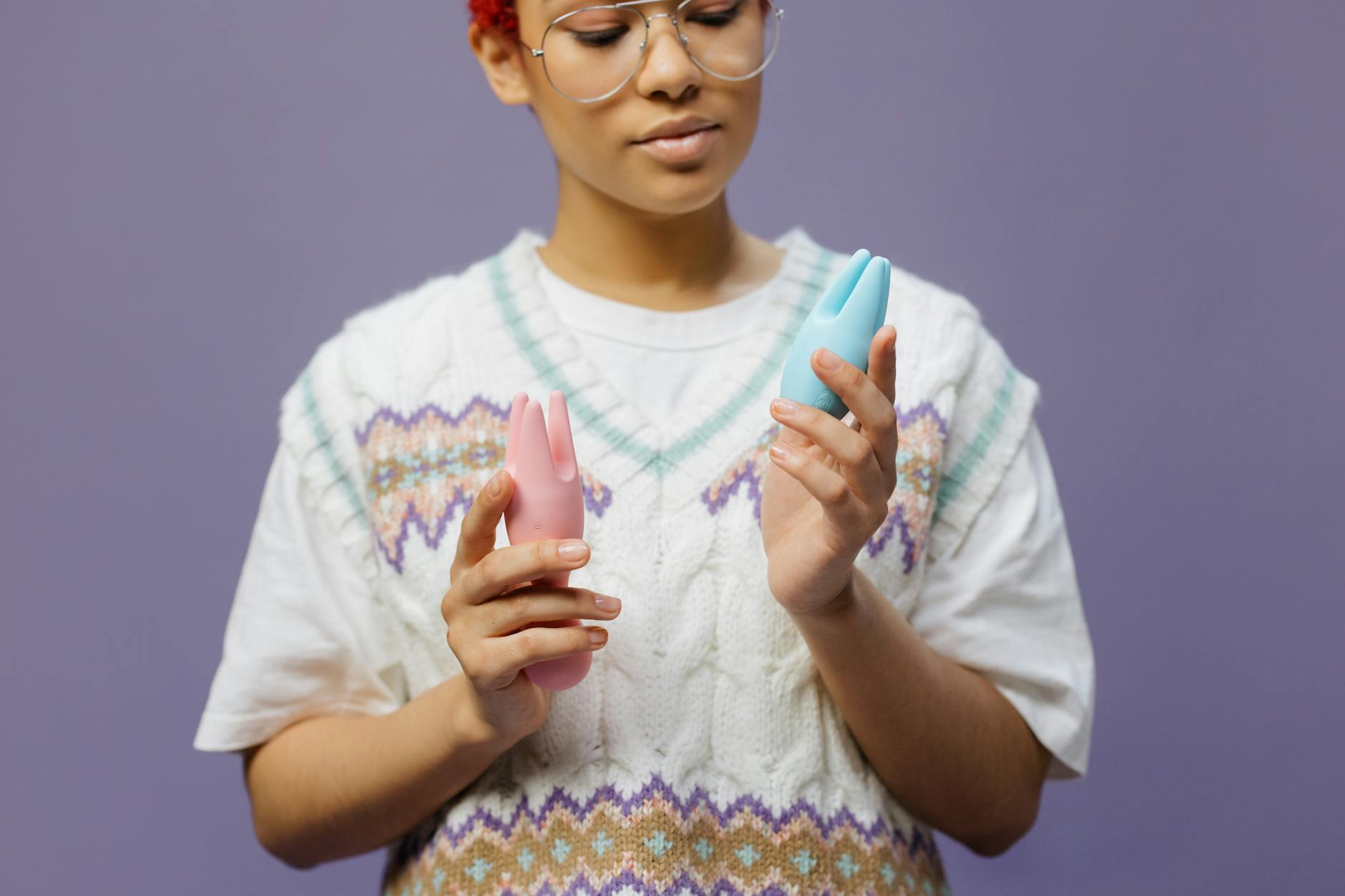
How to Use a Lemon Vibrator During Your Follicular Phase
Estrogen peaks, sensitivity shifts, and your clitoral vibrator experience changes. Here's how to match your lemon sucker settings to your hormone timeline for maximum sensation.
Here's the thing nobody tells you: your pleasure isn't static. It changes week to week depending on where you are in your menstrual cycle, and that's not a bug. It's the system working exactly as designed. Your follicular phase—the stretch from day one of your period through ovulation—is when your body is primed for intensity, sensitivity, and sensation.
If you use a lemon clitoral vibrator, your follicular phase is when you'll feel it most acutely. The settings that felt perfect last week won't feel the same this week. This isn't about chasing novelty. It's about working with your body's actual biology instead of pretending it's the same every single day.
During your follicular phase, estrogen rises steadily. This isn't subtle. Your tissues are fuller, your circulation increases, and your nerve sensitivity sharpens. The clitoris itself swells slightly due to increased blood flow. Your brain is also primed differently—dopamine is climbing, which means you're neurologically wired for reward-seeking and stimulation right now.
The second thing that happens is your nervous system becomes more reactive. You're literally more sensitive to touch, temperature, vibration, and pattern changes. This means the settings you chose during your luteal phase might feel too intense or, oddly, not intense enough—the sensation quality changes, not just the volume.
Third, your pelvic floor is more responsive. It contracts more readily, which can make orgasms feel sharper, more concentrated, and sometimes easier to reach. If you usually need longer warm-up time, your follicular phase gives you a natural advantage.
Start by going lower than you think you need to. The Lemon's patterns 1 through 3 are where most people live during their follicular phase, even if they usually prefer patterns 5 and 6. Your nerve density is higher, which means you're getting more signal from less stimulation.
Then pay attention to the difference between rhythm and intensity. During your follicular phase, your brain responds better to pattern complexity than raw power. The constant pulse of pattern 1 might feel flat, but the wave-pulse of pattern 4 can feel deeply satisfying even at lower volumes. Spend time exploring the middle patterns instead of jumping straight to the highest intensity.
One shift many people notice: the ramp-up effect works faster now. Where you might have needed five minutes of warm-up during your luteal phase, you're building arousal in two to three minutes during your follicular phase. This is your window to play with longer, slower patterns that might have felt boring before. Your brain has bandwidth for nuance now.
Your sensitivity doesn't mean you want the same pressure you enjoy in other phases. In fact, the opposite is often true. During your follicular phase, lighter pressure with more surface contact feels better than deep, focused intensity. The Lemon's suction mechanism is ideal here because it distributes sensation across the full clitoral area instead of concentrating it on a single point.
Try angling the Lemon slightly differently than you normally would. Instead of dead-center pressure, experiment with light side-to-side movements. Your heightened sensitivity means small positional changes register as big sensation changes. You're not chasing harder; you're chasing different.
If you usually finish quickly, your follicular phase might extend that window naturally. Take it. This is your chance to explore longer sessions without it feeling forced. Your body wants to be stimulated right now, and extending from five minutes to fifteen feels less like work and more like play.
The follicular phase spans about ten to twelve days, but the intensity ramps up toward ovulation. Days three through seven feel one way, and days nine through twelve feel another. The closer you get to ovulation, the more responsive your body becomes, and the higher your natural dopamine and testosterone are running.
If you're tracking ovulation (LH surge, basal body temperature, or cervical mucus), you can fine-tune this even further. The forty-eight hours immediately before ovulation? That's when most people report their sharpest sensation and fastest orgasms. Some people also find they can experience multiple orgasms more easily in this window. Your lemon clitoral vibrator feels different at this peak.
For the week after ovulation, you're entering your luteal phase. Sensitivity drops, intensity preferences shift, and the patterns that felt perfect five days ago might feel harsh now. This is why tracking matters. You're not being inconsistent; your nervous system is following a biological rhythm.
During your luteal phase, warm-up is essential. You need time to coax arousal and build sensation. During your follicular phase, that need softens. Your body is already primed by hormones, and your brain is actively seeking stimulation. This doesn't mean skipping warm-up entirely, but it does mean you can shorten it or change its character.
Instead of using warm-up to build arousal, use it to explore. Start on pattern 1 and spend two minutes just noticing how each pattern feels different. Your heightened sensitivity means you'll register subtle variations that felt invisible before. By the time you reach your preferred pattern, you're already partially aroused just from the sensory exploration.
Mental state matters more during your follicular phase than any other time. Fantasy, anticipation, and novelty land harder because your dopamine system is already revving. If you usually need total quiet and focus, your follicular phase might be the time to experiment with music, ambient stimulation, or partner interaction. Your nervous system is hungrier for input right now.
If you have a partner, your follicular phase is the ideal time to experiment with partnered use of your lemon sucker. Your increased arousal responsiveness and faster warm-up time mean partnered sessions feel less like instruction and more like flow. The person with you can watch your reactions and adjust patterns in real time, which feels collaborative instead of clinical.
When you're inside a partner or using penetration alongside your Lemon, your follicular phase creates an advantage: your pelvic floor is more responsive, and your arousal builds faster. The combination of internal and external stimulation lands with more intensity. Some people find they can reach orgasm during this phase from simultaneous stimulation that would have felt muted a week before.
Honestly though, the biggest gift of cycle syncing with a partner is the conversation it opens. When you can say, "My body feels different right now because of where I am in my cycle," you move pleasure out of the realm of performance pressure and into something collaborative. You're not asking your partner to fix anything. You're giving them real-time information about how your nervous system is wired this week.
If you're not hitting the pleasure you expect during what should be your peak sensitivity window, three things might be happening.
First, stress hormones (cortisol) can dampen estrogen's effects. If you're in a high-stress week, your body might be producing enough estrogen but not enough of the relaxation neurochemistry to let you feel it. This is why sleep, food, and movement matter as much as where you are in your cycle.
Second, you might be chasing the same intensity you preferred during your luteal phase. Your follicular phase wants different input, not higher volume. Lower your intensity expectation, trust the patterns, and let sensation build differently than it did last week.
Third, medication or health changes can flatten hormone responsiveness. If you're on SSRIs, hormonal birth control, or recovering from illness, your cycle might not create the classic follicular-phase responsiveness you'd normally expect. That's not a failure. It just means your template needs adjustment.
No. You release one egg per cycle, and ovulation happens once, typically fourteen days before your next period starts. But ovulation is a process, not a point. The forty-eight hours surrounding your LH surge create the window where sensitivity peaks most reliably.
Absolutely. Beyond your cycle, arousal level, stress, food, and hydration all affect sensation. Your follicular phase amplifies these differences, but they exist year-round. This is why "finding your favorite setting" is less useful than learning to read what your body wants right now.
No. Cycle tracking for contraception requires precise ovulation timing to avoid conception. Cycle syncing for pleasure just needs to know roughly where you are in your cycle. You can sync your lemon vibrator use to your cycle without tracking ovulation if you just follow general patterns: high sensitivity days eight through fourteen, lower sensitivity days fifteen through twenty-eight.
Start with the sensations instead of the dates. Notice when your body feels most sensitive and responsive, when warm-up feels easy, when you crave intensity versus nuance. The follicular phase has a feeling. Once you know that feeling, you can sync your approach regardless of whether your cycle runs twenty-four days or thirty-five.
Yes. Many people feel less sensation during their period (days one through five) because blood flow is outward instead of concentrated in clitoral tissue. This shifts around day six or seven. Your lemon clitoral vibrator might feel muted the first few days, then suddenly feel sharper. This isn't your vibrator changing. It's your body's rhythm.
Yes, and some people find period sex deeply satisfying. Blood is lubricating, and for some people, orgasms during menstruation feel different (sometimes more intense, sometimes more muted). Your clitoral vibrator works fine during your period. You might just prefer slightly higher intensity than you would during your follicular peak.
Cycle syncing isn't about forcing your pleasure into rigid boxes. It's about noticing that your body isn't the same every week and adjusting your approach accordingly. Your follicular phase is your body's way of saying: I'm ready. Your lemon vibrator is just the tool that amplifies that readiness into sensation.
The pleasure you can access during your peak follicular phase—days nine through fourteen if you're tracking, or the two weeks right before your next period starts—is often the most reliable, responsive, and satisfying of your entire cycle. Some people have their best orgasms during this window. Others discover patterns they never thought they liked. Your job is to show up curious and let your body teach you what it wants.
If this framework resonates but you're not sure where to start, consider tracking just one thing: arousal quality. Rate how quickly you get turned on, how responsive sensation feels, and how easy orgasm comes. Do this for two cycles. You'll see your personal rhythm emerge. From there, adjusting your lemon sucker settings becomes intuitive instead of theoretical.
Your pleasure has seasons. Your follicular phase is spring. Make it count.