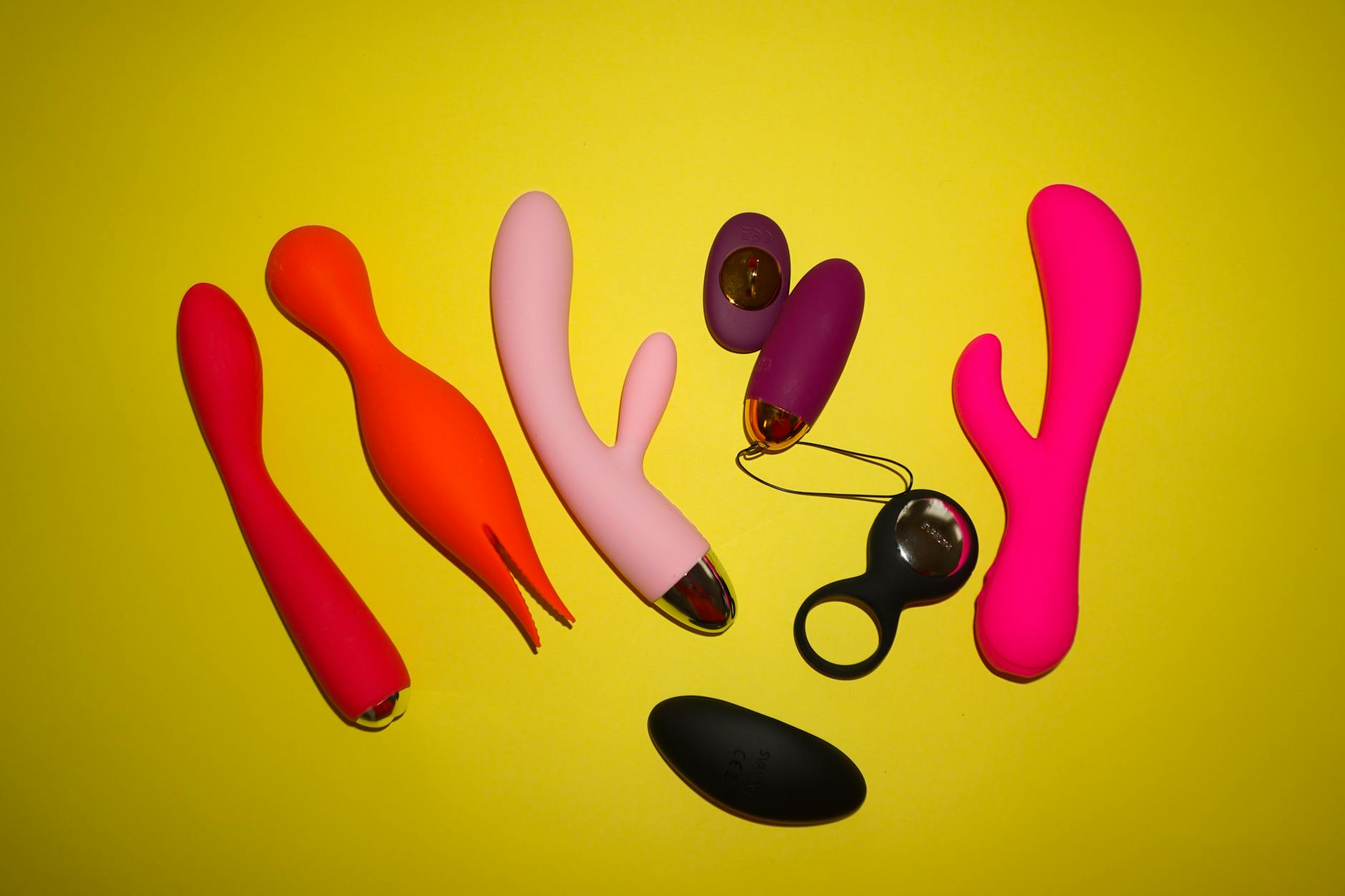
How to Use Lemon Clitoral Vibrators for Better Orgasms With a New Partner
Introducing a lemon vibrator into a new relationship doesn't have to feel awkward. Here's the honest conversation framework, the logistics, and why it often makes everything better.
Let's be real: bringing a vibrator into a new relationship feels like it should be a bigger deal than it is. But here's what I've seen across hundreds of couples in my practice. The partners who integrate toys early almost always report deeper connection, longer sessions, and less performance anxiety. The ones who wait often overthink it into a problem that doesn't exist.
The reason is simple. A vibrator isn't a threat or a replacement. It's information. It tells your partner exactly where and how you like to be touched, removes the guesswork, and gives you both permission to stop pretending anyone can read minds.
So the conversation doesn't need to be a "We need to talk" moment. It can be casual, honest, and even fun.
Timing matters more than you'd think. In the first few weeks of a new relationship, you're both still figuring each other out. Introducing a lemon clitoral vibrator now, while you're still in exploration mode, feels way less loaded than bringing it up six months in when you've both locked into a routine.
Here's the dynamic: new partners are usually curious about what works for you. They want you to have better orgasms. They're not invested in a fantasy of "doing it all themselves" yet. That can come later if neither of you wants to evolve. But right now, you have permission to be practical.
One more thing. Lemon vibrators are designed for external clitoral stimulation, which means they work in almost any position, with almost any partner body. There's no barrier to entry, no complicated logistics. You can use one during foreplay, during partnered sex, or while they're inside you. That flexibility makes them the easiest toys to integrate into new-relationship sex.
Forget romantic preambles. Here's what I tell my clients to say:
"I have a clitoral vibrator I love. I use it on my own, and I'd really like to try it with you. It makes me come faster and harder, and I think it could be fun together."
That's it. Three sentences. You're giving information, not asking permission. You're normalizing it (you already use it), and you're being specific about the outcome (better orgasms).
Most partners will say yes immediately. Some will ask questions: How does it work? Does it feel weird? Will it get in the way? Those are all fair, and they're all answerable. You're not selling them anything. You're just explaining a tool you've chosen.
If they seem hesitant, the next line is: "We don't have to use it if you're not into it. But I'd love to show you what it does."
That removes pressure. You're not saying "I need this." You're saying "I want to share this with you." There's a difference.
Once they've said yes, the logistics matter more than you'd think. Here's the flow:
First time, solo demo. This sounds weird, but it works. Show them how you use it on yourself. No pressure to touch you. Just let them see it in action for 30 seconds. Most of the mystery evaporates immediately. They realize it's just a vibrator, not some alien technology.
Then hand it over. "Want to try it on me?" Now they're holding it, you're guiding them, and the power dynamic is collaborative. You're the expert on your body, they're the hands.
Start on a low setting. Lemon vibrators typically have multiple intensity levels. Begin at pattern 1 or 2. Let them feel the difference between patterns without you having to narrate every sensation.
Give directions, not performance feedback. Instead of "That's not quite right," try "A little higher" or "Try the second pattern." You're coaching, not correcting. Big difference in how it lands.
There are three things about lemon clitoral vibrators that make them ideal for new-relationship sex:
1. The suction design. A lemon vibrator uses gentle suction pulses instead of direct vibration. This means your partner can't accidentally hurt you by holding it wrong, pressing too hard, or getting the angle off. The sensation is consistent. That reduces their anxiety dramatically.
2. The size. Lemon vibrators are small enough to hold easily, which means your partner can stay close, maintain eye contact, and keep their hands free to touch the rest of you. It's not a barrier between you. It's an extension of their touch.
3. The intensity. Even at full power, lemon vibrators are designed for pleasure, not pain. New partners often worry they're "doing it wrong" or hurting you. A lemon vibrator gives them a tool that's nearly impossible to misuse.
If your partner has watched porn, they might expect vibrators to be loud, intimidating, or require gymnastics. A lemon vibrator is quiet, elegant, and just works. That's reassuring.
Once you've used it the first time, it becomes just another part of your toolkit. Here's how to normalize it:
Don't save it for "special occasions." If you use a lemon clitoral vibrator every third time you have sex, great. If you use it sometimes during foreplay and not during penetration, that's fine too. The goal is to make it unremarkable, not precious.
Your partner will start to develop preferences about when to use it, which patterns feel best, and how to integrate it into your sex life together. Let them. They're learning your body. That's the whole point.
After a few times, you'll notice something shifts. The pressure lifts. Your partner stops wondering if they're doing it right and starts paying attention to what actually works. Your orgasms probably get better because you're more relaxed. And here's the part people don't talk about: your partner gets better at sex in general, because they've learned to pay attention to feedback instead of guessing.
Once you've introduced a vibrator, there's one more topic worth addressing early. Some new partners wonder if you'll always need it to come. Some worry that you prefer it to them. Some think it means the relationship is "advanced" or "kinky" in some specific way.
None of that is true. But it's worth saying explicitly: "I can come without it, but I like using it with you. It's not about you not being enough. It's about both of us exploring what feels best." That reframe does a lot of work.
You're not replacing them. You're expanding. That's the honest version, and most partners get it immediately once you name it.
Ideal window: After you've had sex 3-5 times, but before you've settled into a completely fixed routine. You need enough trust that they feel safe being curious, but not so much time has passed that patterns feel locked in.
If it's been a few months and you haven't mentioned it yet, don't panic. Bring it up the same way. "I've been thinking about trying something with you." The conversation works just as well at six months as at six weeks.
The only real wrong time is during sex itself, without warning. That's where miscommunication lives.
Only if you frame it that way. Which you won't. A vibrator isn't about their skill level. It's about your body's response to a specific sensation that hands alone can't replicate. Partners who feel secure about themselves get that instantly. The ones who struggle with it are usually struggling with something else, and a vibrator isn't the actual problem.
Absolutely. Most partners find it incredible because it adds sensation without changing the dynamic of penetration. You can rest it against your clitoris while they're inside you, and it works with any position. This is actually one of the easiest ways to introduce a vibrator into partnered sex because it doesn't require you to change what you're already doing.
That's great. It means you're both exploring, and you're building a shared language around pleasure. Some couples use vibrators at the same time. Some take turns. Some use them on each other. All of it is fine. The point is that you both know what works for your own bodies, and you're not guessing.
If you already have a lemon vibrator you love, use that one. Your partner will learn how it works, how it responds, and what you like. If you want a fresh one for the shared experience, that's also fine. There's no rule here. What matters is that you're both comfortable with the tool you're using.
The same way. "I've been thinking about trying something with you, and I wanted to see if you'd be interested." Most partners don't care how long you've been together. They care that you want to explore together. Don't overthink it as a delayed confession. It's just the next thing.
Yes. Roughly 65-75% of women need direct clitoral stimulation to reach orgasm. Most hands and penetration alone don't provide that. A lemon clitoral vibrator bridges that gap. Using one doesn't mean there's anything wrong with you or your partner. It means you both understand your body and you're using the right tool for the job.
When you bring a lemon vibrator into a new relationship, you're doing something bigger than adding a toy to your sex life. You're teaching your partner that pleasure is collaborative, that communication works, and that being practical about your body is sexy, not clinical.
You're also giving yourself permission to have better orgasms, which matters. You deserve that. Your pleasure is worth the five-minute conversation.
Most couples who do this early report that it sets a tone for their entire relationship. They become the kind of people who talk about what they want, who aren't embarrassed about bodies, and who see sex as something they build together instead of something that just happens.
That starts with a lemon clitoral vibrator and a willingness to say what you actually want. Pretty good return on investment.
If you're navigating pleasure, partnership, and honesty in a new relationship, I'm here to help. The Lemon Clit Sucker exists to make these conversations easier. And if you need guidance on how to have them, that's what I do. Get in touch, and let's talk about what works for you.